June is Adopt A Cat Month and Adopt a Shelter Cat Month
June marks the official start of summer, and for our feline friends in need of forever homes it also marks the start of Adopt A Cat Month and Adopt a Shelter Cat Month!
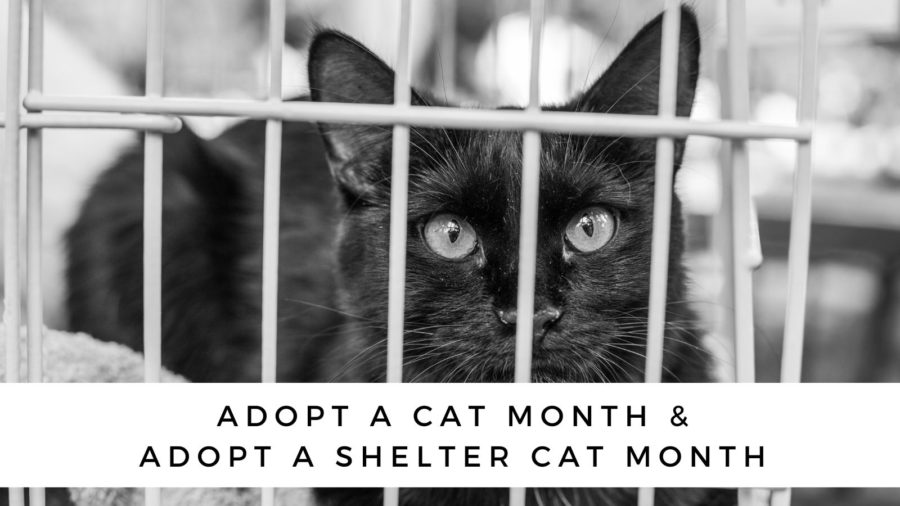
Why is there both an Adopt a Cat Month and Adopt a Shelter Cat Month?
Although they both have the same goal–to get some of the huge population of shelter cats into forever homes–these two pet holidays have different origins. Adopt a Cat Month® was established by the American Humane Association. Adopt a Shelter Cat Month was created by ASPCA.
Why did both holidays select June?
June is the peak of kitten season at shelters from coast to coast.
According to PetSmart Charities, approximately 20 million kittens are born each spring. Many find themselves caught up in the shelter system… sometimes with tragic results.
Although people often presume that a cute kitty will have no problem finding a forever home, prenatal kittens who need constant care will lose their lives if a shelter is unable to find a foster who will tend to their needs, while those of age to be adopted can fall between the cracks at a shelter due to the overwhelming number of adoptable kittens.
Why shelter cats need this extra help!
Cats are often considered America’s most popular pet, although statistics have a sad side, too. Research shows that cats:
- receive less veterinary care than dogs
- have less research dedicated to their well-being
- are more likely to be feral
- lose their lives in the shelter system at the alarming rate of 1.3 million each year
How much does it cost to adopt a cat or kitten?
You’re searching for your next feline family member but you’re torn between the shelter cat, the free kitten available from your neighbor, and the purebred kitten you saw at a local cat show. They’re all equally adorable but, if you look at the economic cost, one cat comes out head and whiskers above the others: the shelter cat.
Although adoption fees vary among shelters and rescues as well as by location and time of year, adoption averages about $70-$100 at shelters with somewhat higher fees for rescues. Discounted prices are often seen during peak kitten season, on special cat holidays and among those cats that are slower to be adopted — senior cats, special needs cats (including FIV+ and FLV+ cats), and even black cats.
Adoption is an economic winner because of the many veterinary services that adoptable cats have already received. At most shelters, kittens and cats will have received:
- Spay or neuter: $150-$200, depending on gender
- First year of shots: $150
- Microchipping: $50
- Deworming: $30
In other words, if you’d purchased those veterinary services for your cat, you’d have spent about to $380-$480–and that’s not even including the flea preventative, ear mite treatment and other extras the shelter/rescue cat will have received. Many shelters also provide a free month of pet insurance upon adoption. We used our free month of pet insurance to care for our cat Inca after adoption; she had a large bloody spot on her ear which turned out to be a bad case of ringworm. The free month of insurance helped us save money.
When you compare those costs to the adoption fee, it’s easy to see that adoption represents a major way to save on preliminary veterinary costs.
Next on the budget: your “startup” costs for a new cat. Whether a cat or a kitten, you’ll need some basic purchases to get off on the right paw including:
- cat food: Money spent on premium food is a great investment; premium dry cat food runs about $2-$5 per pound (although you can find specials). Before purchasing a food, however, find out what food the shelter/rescue was feeding and purchase the same brand for your first bag. It’s always best to slowly transition your cat to a new food, changing out just about 20 percent of the food each day to prevent digestive problems.
- cat bed: Every cat loves a cuddly cat bed but, for nothing more than your time, it’s easy to make a cat bed with a cardboard box and some soft sweaters. Cost: free; $8-$20 for inexpensive beds.
- litterbox: You’ll want at least one litterbox (and two is better). The box should be 1-1/2 times longer than your cat. If you’re adopting a kitten, be sure to get a litterbox with lower sides; the same holds true if you adopt an older cat with any mobility issues.
- cat litter: As with cat food, it’s best if you can start your cat off using the same brand of litter he or she was using at the shelter.
- cat carrier: You’ll want to take along a cat carrier to the shelter or adoption event; a carrier is the safest way to transport home your new family member. Watch for carriers on Freecycle and Craigslist as well as thrift shops, then sanitize them thoroughly before use. Cost: about $25, if new, for a hard-sided carrier.
- bowls: Watch for stainless steel food and water bowls at thrift stores for $1-$2 each. Be sure to select wide-mouthed bowls to prevent whisker stress which occurs if your cat’s whiskers are brushing against the bowl as he eats or drinks.
- scratcher: An inexpensive cardboard scratcher can be a lifesaver, saving your furniture and giving your new cat hours of fun.
toys: Cat toys are easy and fun to make (even for non-crafters!) From a pinch of catnip in an old sock to a small ball in an old tissue box, many household items can be converted into fun cat toys. And don’t forget the joy of a cardboard box with holes cut in the side!
Questions to ask the shelter when adopting a cat
Heading off to a shelter to check out the cats? Hill’s® Science Diet®–which provides food–ALL the food–for over 1,000 shelters as part of their shelter program–recommends asking shelter staff about these important topics:
- The cat’s history – Find out as much as you can about the cat’s background. Was it a stray or given up by its owner? Did it come from a loving home? Did it live with other pets or with children?
- Medical and behavioral assessments – Find out what evaluations have been done and what lifestyle would suit it best. Ask about the pet’s interaction with the staff, and what their impressions are.
- The adoption timeline and process – Some shelters will let you take an animal home right away, while others take a slower approach. Find out what to expect up front.
- Spaying/neutering – Most shelters have policies to make sure that animals leave spayed or neutered. Some take care of this before the animals are available for adoption. Others schedule the procedure when the animal goes home and either finalize the adoption once it is performed, or refund the spay/neuter deposit once proof is provided.
Tips on adopting a cat
If you are a potential pet parent who is pondering the possibility of welcoming a cat into your heart and home, the American Humane Association offers the following tips:
Consider adopting a kitty companion for your new cat.
Adopt Two Cats!
If you’re thinking about adopting a cat, consider taking home two. Cats require exercise, mental stimulation, and social interaction. Two cats can provide this for each other.
Plus they’ll provide more benefits to you. Cats’ purring has been shown to soothe humans as well as themselves – and they have an uncanny ability to just make you smile. A great place to start your search is online. Sites like Petfinder let you search numerous shelters in your area simultaneously to help narrow your search and more quickly find the match that’s right for you and your new feline friend.
Adopt a cat who shares common character traits with you.
If you are a mellow fellow, a cat with a calm demeanor may be best suited for your lifestyle, while a person with an outgoing personality might best mesh with a playful purring pal.
The American Humane Association advises that, in general, cats with long hair and round heads and physiques are more likely to be more serene than cats who are lean with narrow heads and short hair.
Vet a veterinarian before adopting a cat, and schedule a visit within days of bringing your new fur baby home.
Pick out a veterinarian ahead of time and schedule a visit within the first few days following the adoption. You’ll want to take any medical records you received from the adoption center on your first visit. Due to their immaturity, kittens in particular should accompany you to make the appointment – even before the exam itself – so staff can pet the cat and tell you that you’ve chosen the most beautiful one ever and the animal will have a positive association with the vet’s office.
“Regular veterinary care is critically important to the health and well-being of your cat,” says Dr. Larry Kornegay, president of the AVMA. “Getting your new cat to a veterinarian early will help make sure there are no underlying illnesses or injuries, and your veterinarian can work with you to develop a plan to help your new pet live the happiest, healthiest, longest life possible.”
Make sure that your family is ready to welcome a new four-legged member.
Everyone in the household should take part in the arrival of a new addition by visiting the shelter together.
Prepare for the short-and long-term cost of being a pet parent.
Understand that any pet is a big, and costly, responsibility. A cat form a shelter will be less expensive to adopt, and many facilities have provided spaying/neutering, initial vaccinations, and a microchip for permanent identification.
As an added bonus, shelters and rescue groups are there to offer guidance and assistance as you acclimate your new family member.
Stock up on supplies before your new cat’s arrival.
To make sure your kitty feels cozy in his/her new surroundings right from the start, purchase cat supplies a litter box and kitty litter, food and bowls, a comfy bed, grooming utensils, a scratching post and toys.
Cat-proof your home for your fur baby.
Just as you would if you were expecting the arrival of a child, check your surroundings for safety hazards.
Keep loose and random objects tucked away in drawers away from a kitten’s curious reach, ensure tat your kitten won’t chew on electrical cords, and remember to put food in the fridge or back in cabinets rather than leaving it on the counter to discourage your new feline friends from jumping up on the counter for meals.
Slow and steady wins the race when introducing a cat to new faces and places.
Give your cat time to adjust to a new environment by temporarily keeping him or her in a single room (along with their necessities, such as a littler box, food and water, toys and an open pet carrier cushioned with bedding)– your cat will then gain a sense of security and will feel like exploring his or her new home.
Seclusion from other parts of the house is especially important when you need to introduce a new furry family member to any new four-legged siblings.
Emergency plans must include pets.
All families should have a plan in place in case an emergency arises, and now that plan needs to include you purring pal’s needs. Add phone numbers for your veterinarian and closest 24-hour animal hospital to your emergency call list, and add 3 – 10 days supply of your cat’s food and medications to your preparedness kits.
Never surprise a person with a cat as a present.
Although well-meaning, remember that an animal is a living being, and being a part of their life is both a privilege and a responsibility that should never be taken lightly. Pet guardians should also take part in the adoption of their new furry friend.
Make room in your budget.
Budget for the short-and long-term costs of your new cat. Understand any pet is a responsibility and there’s a cost associated with that.
A cat adopted from a shelter is a bargain; many facilities will have already provided spaying or neutering, initial vaccines, and a microchip for permanent identification. Plus, shelters and rescue groups are there to offer guidance and assistance as you acclimate your new family member.
Add your new cat to your emergency plans.
Be sure to include your new cat in your family’s emergency plan. You probably have a plan in place for getting your family to safety in case of an emergency. Adjust this plan to include your cat. Add phone numbers for your veterinarian and closest 24-hour animal hospital to your “in-case-of-emergency” call list, and be sure to have a several-day supply of your pet’s food and medications on hand.
“Making sure your pets will be safe in an emergency situation is a critical part of ensuring the wellbeing of your entire family,” said Dr. Robin Ganzert, President and CEO of American Humane Association. “By having an emergency plan for the animals in your house, you could literally be saving lives – your pets, your own, and those involved in rescue efforts – and will make it easier to return to a normal life after the emergency is over.”
More ways to help shelter cats
If you can’t adopt, what else can you do to help our feline friends in need during Adopt a Shelter Cat Month? The ASPCA offers the following suggestions:
- Raise awareness of the paws cause while raising funds! Animal lovers can join Team ASPCA by creating a virtual fundraiser online, or throw a purrty with a higher purrpose to mark the month-long celebration of shelter cats.
- If you have been pondering the possibility of welcoming a purring pal into your life, pay a visit to your local shelter and meet some adoptables who may have a hard time finding their special someone to love:
- Give the present of a better tomorrow to a shelter cat by making a monetary gift to a shelter or an organization like the ASPCA, by making a contribution of much-needed supplies to your local animal shelter, or by offering your time as a volunteer.
Adopt a Cat Month is Just the Beginning

While Adopt a Cat Month is timed to coincide with the peak of kitten season when shelters are overwhelmed with unwanted litters, you’ll find kittens, older cats, special needs cats, and (our favorite) black cats year around at your local shelter.
Here in Texas, the warm weather means that kittens are born throughout the year. We adopted Lucky in February; his birthday is sometime near Halloween.
Since our home includes three other cats and two large dogs, we had a specific purr-sonality in mind when we went to adopt Lucky. Because we do have other cats in our home, we were looking for a shelter that had screened cats for both Feline leukemia (FLV) and Feline immunodeficiency virus (FIV). We called around to local shelters to confirm which ones had pre-screened their population of adoptables.
And, since we have two large dogs, we wanted an outgoing cat, one who wouldn’t be intimidated by our sometimes boisterous dogs Irie and Tiki.
We wanted a kitten who could adjust to our busy home — but, at the same time, we didn’t want a very young kitten who might be too small with our dogs.
For a week, we visited local shelters and pet adoption events until one evening we found a listing for a five-pound, four-month-old black and white kitten name “Tuxie.” We were at the shelter before it opened the next day and the rest, as they say, is history. Our search brought us a outgoing, fun-loving kitten — and Tuxie became Lucky — who now loves all his furry family members.

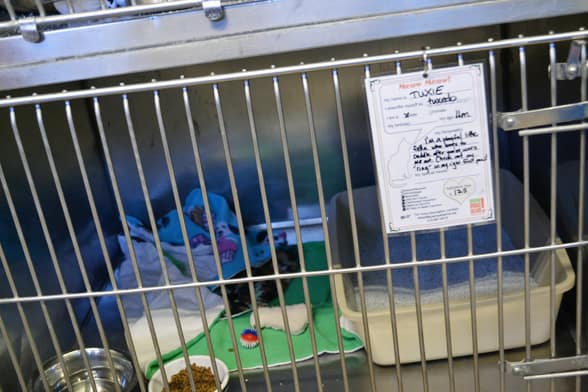
Adopting from an animal rescue saves two lives: the cat you take home and the one who will soon take his place in the empty kennel. When we left with Lucky, we took this shot of his then-empty kennel and thought of the next cat who would call this space home for a while.
I hope he, like our Lucky, found a happy home.
More Cat Holidays
We’ve got more June cat holidays here on CatTipper; you also might enjoy:
National Pet Preparedness Month
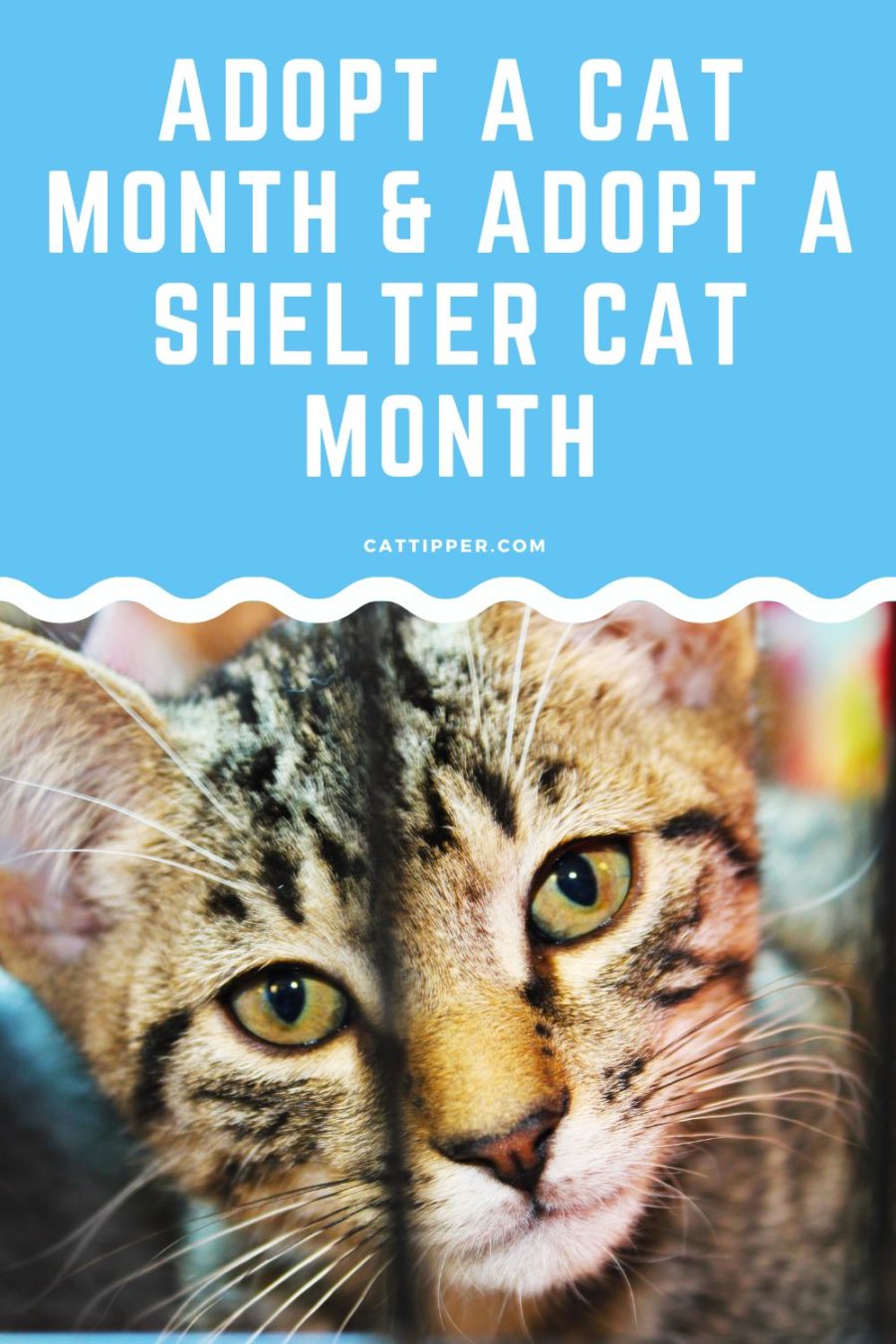
Pin it to remember Adopt A Cat Month and Adopt a Shelter Cat Month

- Coquette Cat Names: 100 Romantic Names for Your Elegant Cat - February 21, 2026
- Soft Girl Cat Names: 150 Gentle Names - February 21, 2026
- Cottagecore Cat Names: 200 Names for Your Cozy Cat - February 21, 2026